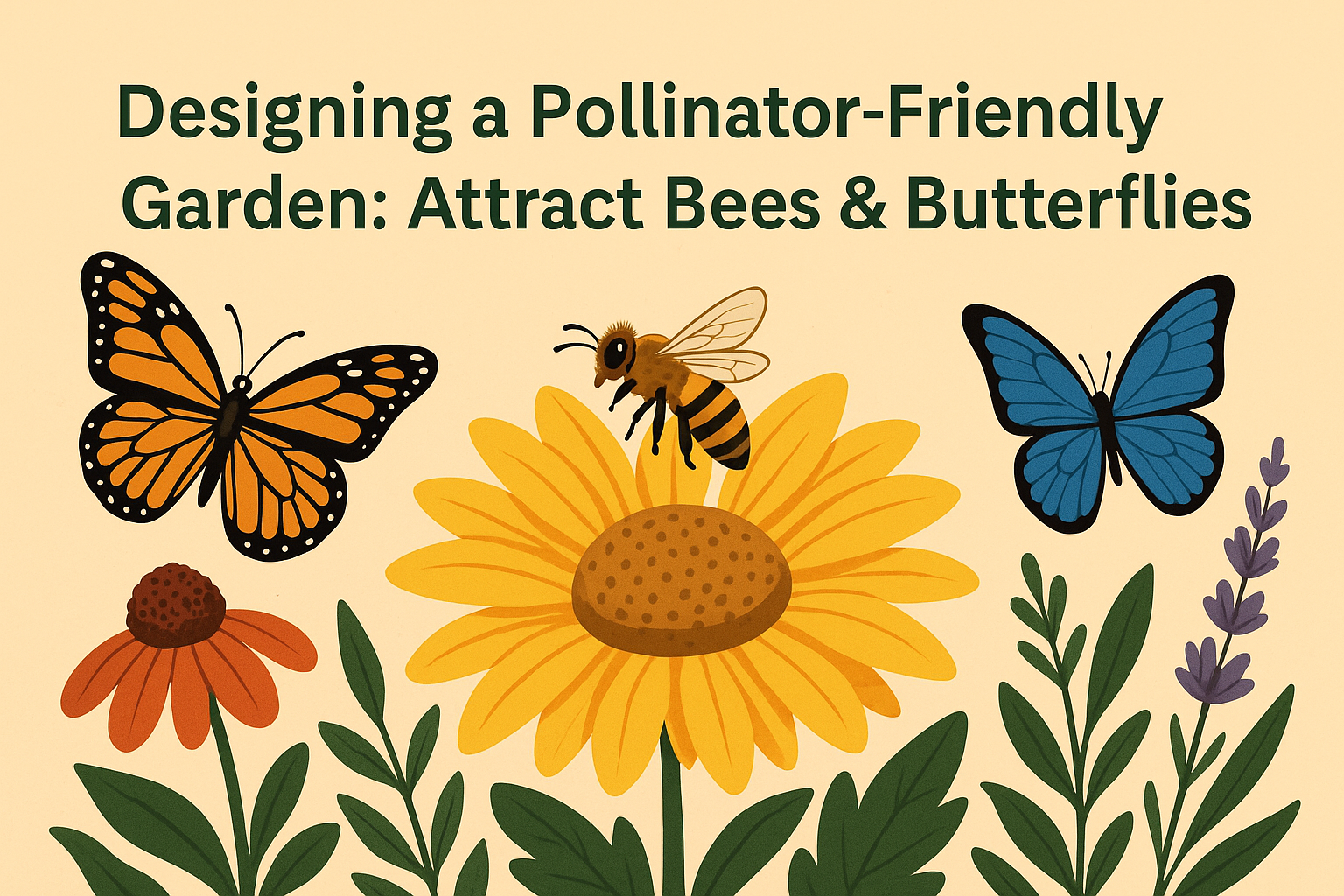
Want to turn your outdoor space into a buzzing haven? With thoughtful pollinator garden design and the right plant choices, you can attract bees & butterflies, support local ecosystems, and enjoy a vibrant, living landscape.
1. Why a Pollinator Garden Matters
Global pollinator populations are declining, yet bees, butterflies, hummingbirds, and other insects play a crucial role in fruit and seed production. A well-planned pollinator garden:
- Boosts biodiversity by providing nectar and pollen sources.
- Enhances fruit and vegetable yields in adjacent gardens.
- Creates a dynamic, ever-changing display of color and movement.
2. Planning Your Wildlife Garden: Site & Structure
2.1 Choose the Right Location
- Select a sunny spot—most pollinators prefer 6–8 hours of direct sunlight daily.
- Ensure shelter from strong winds; place near fences, hedges, or garden walls.
- Provide easy access to water by adding a shallow birdbath or a small dish with pebbles.
2.2 Incorporate Structural Features
- Add flat stones or pavers for sunbathing butterflies and solitary bees.
- Install bee hotels or leave standing deadwood for native pollinator nesting sites.
- Use low garden edges or stepping stones to create “flight corridors” between plantings.
3. Plant Selection: Nectar & Pollen Powerhouses
Choosing a diverse palette of native and pollinator‐friendly plants ensures continuous blooms from spring through fall:
3.1 Spring & Early Summer Blooms
- Salvia spp. (Sage)
- Echinacea purpurea (Purple Coneflower)
- Rudbeckia hirta (Black‐eyed Susan)
3.2 Mid‐Season Staples
- Monarda didyma (Bee Balm)
- Asclepias tuberosa (Butterfly Weed)
- Lavandula angustifolia (Lavender)
3.3 Late Season & Fall Favorites
- Solidago spp. (Goldenrod)
- Helianthus spp. (Perennial Sunflower)
- Aster spp. (Michaelmas Daisy)
4. Garden Layout & Planting Tips
- Group by Species: Plant in clusters of 3–5 to make nectar sources more visible to pollinators.
- Layer Heights: Arrange tall back‐of‐border plants behind mid‐height and ground‐cover layers.
- Color & Scent: Choose bright purples, blues, yellows, and pinks—and include fragrant blooms to guide pollinators.
- Succession Planting: Sow or transplant in intervals to avoid gaps in flowering periods.
5. Maintenance & Wildlife Garden Tips
- Limit Pesticides: Avoid broad‐spectrum insecticides; if necessary, use targeted, least‐toxic options and apply in evening when pollinators are inactive.
- Deadheading: Remove spent blooms selectively—leave some seed heads for late‐season pollinators and birds.
- Water Care: Refresh water stations weekly to prevent mosquito breeding.
- Fall Cleanup: In late autumn, cut back perennials partially, leaving some stalks for insulation and nesting habitat over winter.
6. Frequently Asked Questions
Q1: Can I use non‐native plants?
A1: While some ornamentals provide nectar, prioritize native species—they co‐evolved with local pollinators and tend to be more resilient.
Q2: How much space do I need?
A2: Even small container or window‐box plantings can support pollinators. Aim for at least 10 square feet of nectar‐rich planting for noticeable impact.
Q3: When is the best time to plant?
A3: Early spring is ideal for most perennials; for fall‐blooming species, plant in late summer to allow root establishment before the first frost.
7. Conclusion & Next Steps
By following these pollinator garden design principles and incorporating a variety of bloom times and structural elements, you’ll create a thriving oasis that will attract bees & butterflies all season long. Start by sketching a plan, sourcing native plants, and dedicating even a small patch of your yard to pollinator‐friendly plantings. Your garden—and the local wildlife—will thank you!
If you found these wildlife garden tips helpful, share your experiences in the comments, and subscribe for more eco‐friendly gardening inspiration!