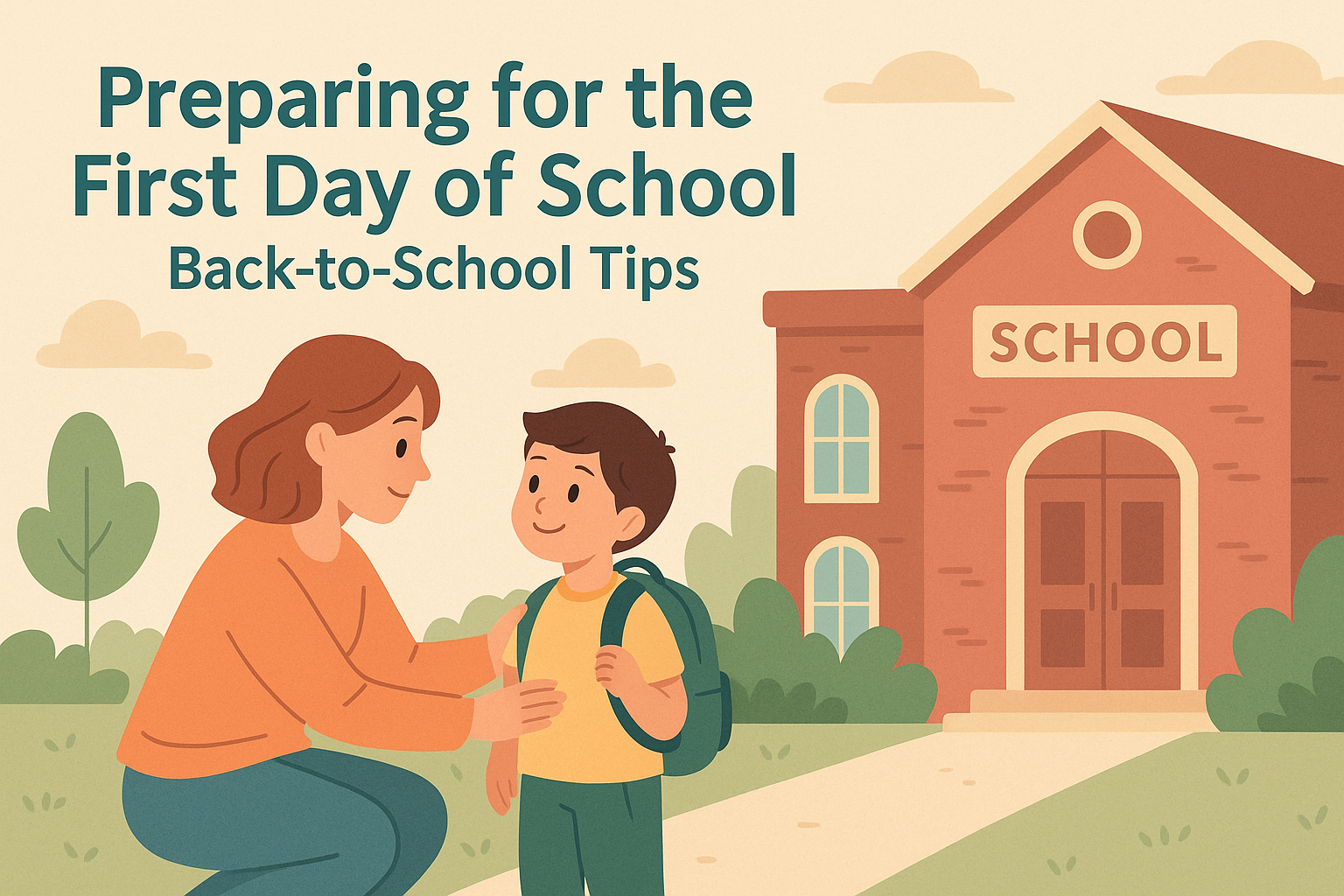
Is your child ready for their big return to the classroom? These practical back-to-school tips and first day of school prep strategies will help you craft a seamless school readiness guide so that both you and your student feel confident and excited.
1. Establish a Consistent Routine
Starting early builds healthy habits and eases morning stress:
- Adjust bedtime and wake-up times: Begin shifting your child’s sleep schedule at least two weeks before school starts so they adapt gradually.
- Practice morning steps: Lay out clothes, pack backpacks, and rehearse breakfast routines to build independence.
- Create a visual schedule: Use a simple chart with pictures or times for wake-up, breakfast, brushing teeth, and departure to keep everyone on track.
2. Organize School Supplies & Workspace
Designate a homework station and stock up on essentials to reduce last-minute scrambling:
2.1 Assemble a School Toolbox
- Pencils, pens, highlighters, and erasers
- Notebooks, folders, and a planner or agenda book
- Scissors, glue sticks, ruler, and a pencil sharpener
2.2 Set Up a Homework Hub
- Choose a quiet, well-lit corner of the house.
- Keep frequently used supplies within arm’s reach.
- Post a weekly calendar or assignment tracker on the wall.
3. Review Academic & Social Expectations
Building familiarity with classroom routines helps reduce first-day jitters:
- Visit the school: Attend orientation or drop by for a quick tour if possible, so your child recognizes key spots like the cafeteria, restroom, and classroom.
- Role-play scenarios: Practice greeting the teacher, asking to use the restroom, and following classroom rules—this builds confidence.
- Discuss lunch and recess: Talk through lunch procedures and playground rules to set clear expectations.
4. Foster Emotional Readiness
Emotional resilience is as important as academic skills:
4.1 Talk About Feelings
- Encourage your child to share hopes and worries about the new grade.
- Normalize nervousness: “It’s okay to feel excited or nervous on your first day.”
4.2 Teach Coping Strategies
- Deep breathing: Practice “balloon breaths” together—inhale slowly through the nose, exhale through the mouth.
- Positive self-talk: Help them create a simple mantra like “I am ready” or “I can do this.”
- Buddy system: If possible, arrange for your child to walk to school or sit near a familiar friend on the bus.
5. Nutrition & Healthy Habits
Fueling the body supports focus and energy:
- Plan balanced breakfasts: Include protein (eggs, yogurt), complex carbs (whole-grain toast, oatmeal), and fruit.
- Pack a nutritious lunch: Add veggies, lean protein (turkey roll-ups, hummus), and a fun snack like trail mix.
- Hydration station: Provide a reusable water bottle and encourage small sips throughout the day.
6. Frequently Asked Questions
Q1: How early should we start back-to-school routines?
A1: Begin adjusting bed and wake-up times at least 10–14 days before school starts to avoid abrupt changes.
Q2: What if my child has separation anxiety?
A2: Practice brief separations—drop them at a neighbor’s house or playdate—and gradually extend the time apart. Reinforce that you’ll return at a set time.
Q3: How can I help my child make new friends?
A3: Arrange a playdate with one or two classmates before school starts. Role-play simple conversation starters like “What did you do this summer?”
7. Conclusion & Action Steps
With these back-to-school tips and a clear school readiness guide, you’ll transform the first day of school from stressful to successful. Start by setting your routine two weeks in advance, organizing supplies, and rehearsing key steps. Most importantly, keep communication open—celebrate excitement and address worries together. Here’s to a fantastic start to the school year!
If you found these first day of school prep ideas helpful, please leave a comment below, share with other parents, or subscribe for more back-to-school resources!